
Bussaco Forest 2025 Guide: Top 10 Sites & Best 5 Hikes

Are you planning a trip to the Bussaco Forest in Portugal?
We know that diving into such an adventure can stir up a mix of excitement and a dash of “Where do I even start?” That’s where we step in!
During our month-long escapade across Portugal, we devoted a whole day to thoroughly exploring the Bussaco Forest.
We trekked the lush trails, stood in awe before the grandeur of Bussaco Palace, and soaked up the peaceful atmosphere that only centuries of history can bestow.
No matter if you’re venturing solo, seeking a picturesque getaway with your partner, or leading a family on an educational adventure, we’ve got the details to help.
We’re dishing out all the essentials: from the must-visit spots and top trails to pro tips that will help you capture the essence of Bussaco’s majestic beauty.
By the time you reach the end of this article, you’ll feel fully prepared to craft an unforgettable itinerary. Get ready to make your journey through Bussaco Forest truly legendary!
What is the Bussaco Forest Portugal?
Bussaco Forest is located in central Portugal, specifically in the northern part of the Coimbra district. It’s situated near the town of Luso, renowned for its thermal springs, and is easily accessible from major cities like Lisbon, Porto, and Coimbra itself.
It is known by multiple names, including Serra do Bussaco, Mata do Bussaco, Buçaco Forest, Bussaco National Forest, and Bussaco Forest Park.

Initially established as a monastic retreat in the 17th century by the Carmelite monks, the forest has since evolved into a notable public attraction.
Its geographical location, with an altitude of 549 meters (1800 feet), creates a very distinct microclimate. This microclimate is characterized by mild temperatures, abundant rainfall of around 60 inches annually, and frequent morning fogs, all of which contribute to fostering a rich biodiversity.
Ecologically, Bussaco Forest has an impressive collection of both native and exotic plant species in its 105 hectares. Notably, the forest includes species from the Americas, Mexico, and Japan, making it a point of interest for botanists and nature enthusiasts.
This diversity is a result of the monks’ efforts to create a comprehensive botanical garden.
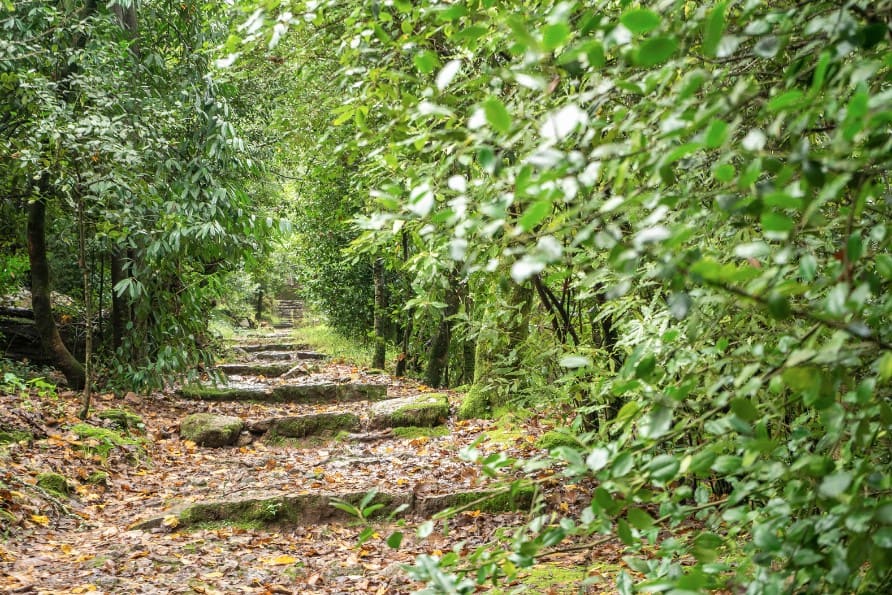
For travelers who love walking/hiking like us, the forest has a range of hiking trails. These trails vary in difficulty and length, providing opportunities for both leisurely walks and more rigorous hikes.
Historically, the forest is known for the Battle of Bussaco which is commemorated by various monuments and sites within the forest.
The Battle of Bussaco, fought on September 27, 1810, was a significant confrontation during the Peninsular War where Anglo-Portuguese troops under Wellington decisively defeated French forces led by Marshal Masséna.
Overall, we loved visiting the Bussaco Forest because it represents an important intersection of ecological diversity, historical significance, and fun hiking opportunities.
Where is the Bussaco Forest?
The Bussaco Forest is situated in central Portugal. Nestled in the northern part of the Coimbra district, it’s easily accessible from some of the country’s major cities.
- Porto from Bussaco Forest: 110 kilometers (70 miles) or 1.5 hours by car
- Check out our Porto Itinerary as well!
- Coimbra from Bussaco Forest: 30 kilometers (20 miles) or 40 minutes by car
- Luso from Bussaco Forest: The nearest town to Bussaco Forest – a short 5-minute taxi ride or a 15-minute walk away (note: it is a very uphill walk).
Why Should You Visit the Bussaco National Forest? 10 Reasons
Visiting Bussaco National Forest in Portugal is an experience filled with diverse attractions and activities. It was one of our favorite days in Portugal!
Its location near major cities like Lisbon, Porto, and Coimbra makes it a convenient and accessible destination for both local and international travelers.
Here are the top 10 compelling reasons to explore this enchanting destination:
#1 – Fonte Fria
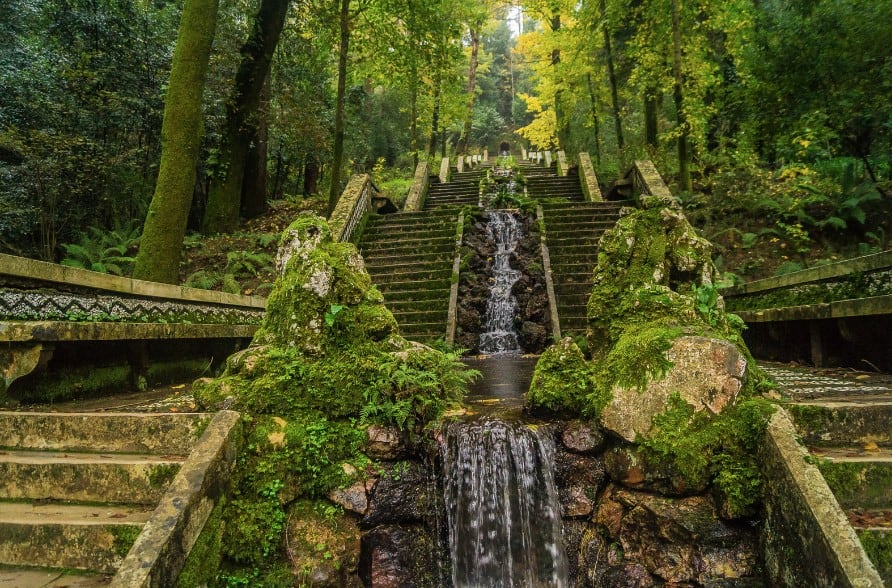
Fonte Fria is an astonishing waterfall with 144 steps on each side of the cascade dating back to the 17th century.
The stairs, effortlessly blending into the landscape, offer a moment of awe-inspiring natural wonder.
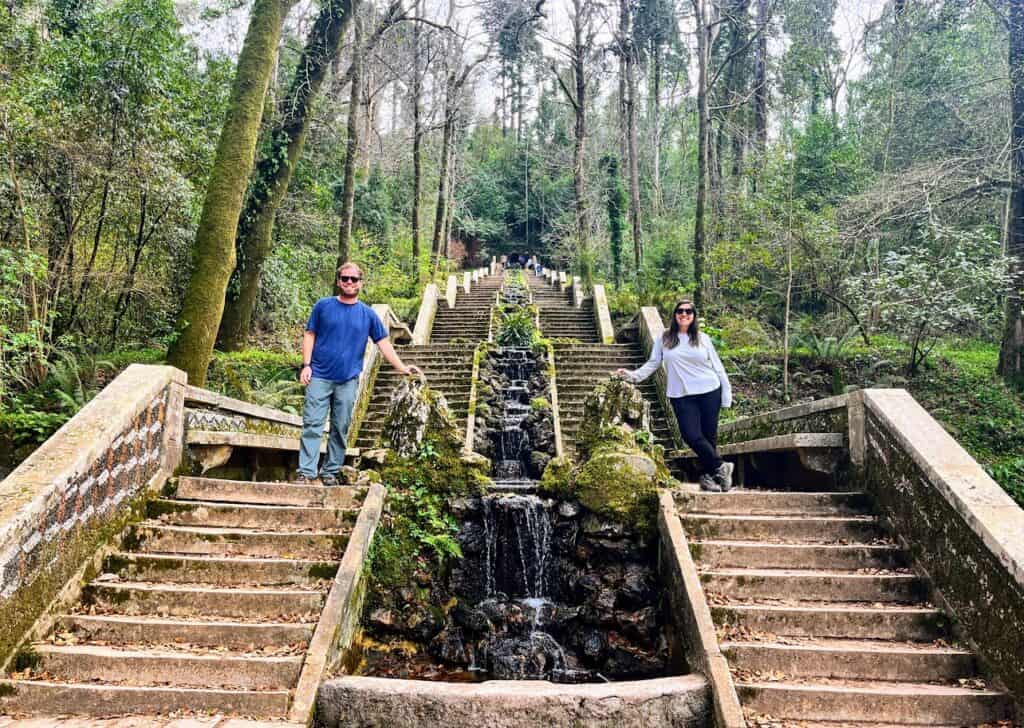
It is our favorite part of the whole Bussaco Forest Park. On our visit, we were utterly blown away by its tranquil beauty and the harmonious sound of water.
The ‘Cold Fountain’ is easily missed just off the main road. But if you stop and park at the Lago Pequeno (Small Lake), you can’t miss it.
#2 – Bussaco Palace
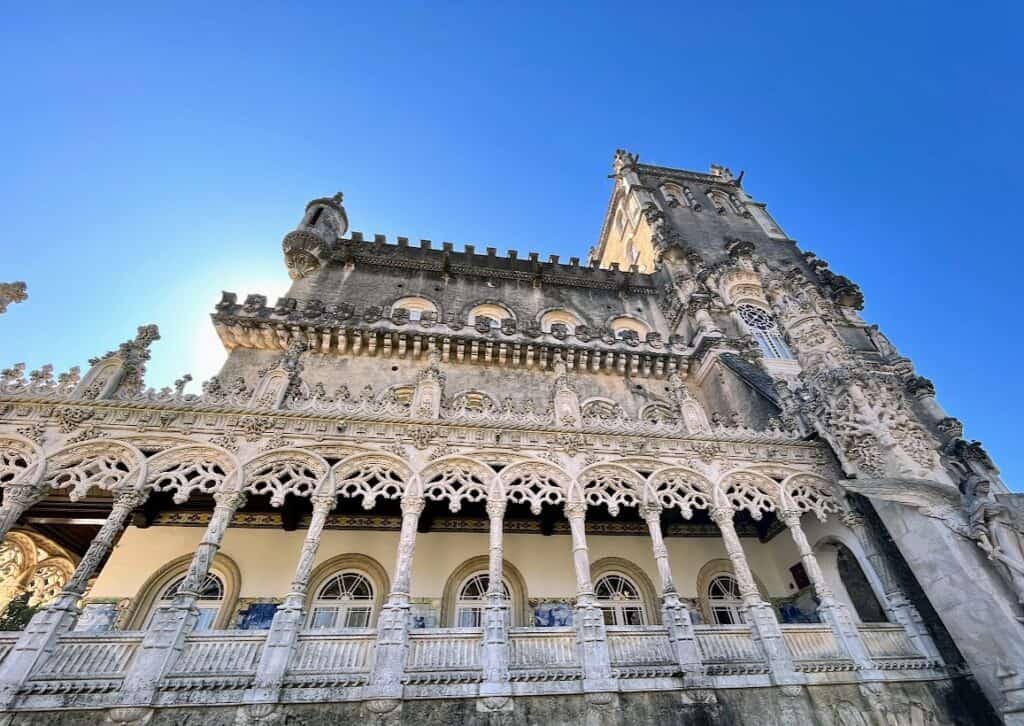
The Bussaco Palace, a gem of neo-Manueline architecture, stands as a testament to Portugal’s royal and religious heritage within the Bussaco Forest.
Initially conceived as a royal hunting lodge, the palace was completed in 1907, intricately adorned with Gothic and Manueline motifs, symbolizing Portugal’s Age of Discoveries.
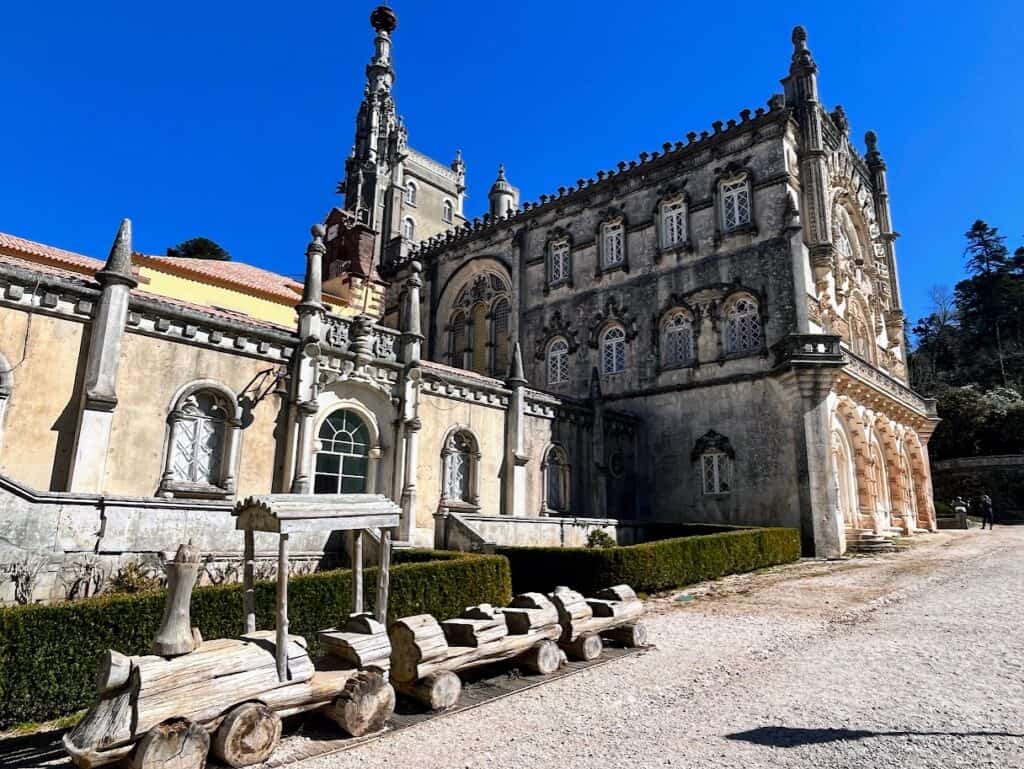
Surrounded by meticulously landscaped gardens, the palace grounds feature exotic and native plants. We really loved walking them!
Nowadays, the Bussaco Palace has been transformed into the Bussaco Hotel, welcoming guests to experience its historic charm and luxurious accommodations.
We really wish we had known about it before our visit because we DEFINITELY would have stayed there. Don’t miss your opportunity!
#3 – Stations of the Cross
The Stations of the Cross in Bussaco Forest are a series of chapels known as “Via Sacra” that depict the Passion of Christ.
These stations were built in the 17th century by the Carmelite monks who inhabited the forest at that time.

The chapels are situated along a path leading up to the high point of the forest, Cruz Alta, marking the culmination of the spiritual journey with a stone cross at the top.
To get there, you will start at the beginning of the trail near the Bussaco Palace and follow the signposted path known as the Via Sacra.
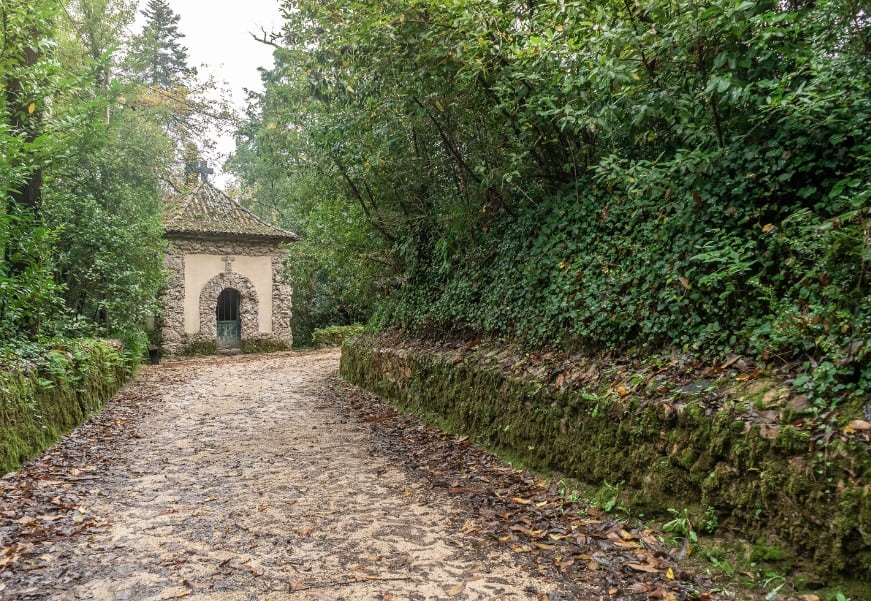
The path weaves through the forest, guiding visitors past each station, which are small, chapel-like structures featuring scenes from the Passion of Christ.

While the hike up was not easy, it was truly incredible and we loved the experience. The chapels are truly a work of art! The amount of detail in each is breathtaking.
#4 – Cruz Alta
Cruz Alta, at 549 meters, is the highest point in Bussaco Forest.
The area is defined as Buçaco Syncline, named for its highly folded geology due to tectonic forces, and the Buçaco Complex features metamorphic matrix rocks.
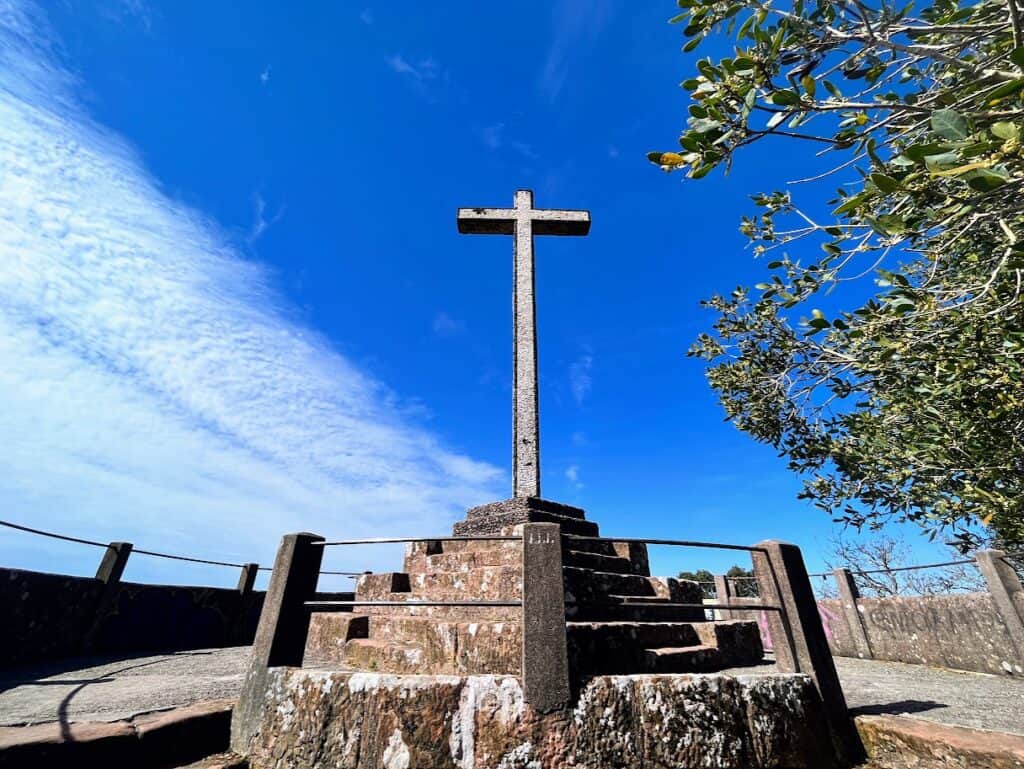
Visitors can hike or drive to the top. To hike it, take the Trilho da Cruz Alta (the path of the “Via Sacra” outlined above). To drive, you have to leave the park by car and drive around and up to it.
We chose to hike; it was strenuous and left us exhausted, but reaching the summit offered a rewarding view that made the effort worthwhile.
At the top of Cruz Alta, a stone cross stands sentinel beside a flight of steps, marking the highest point.
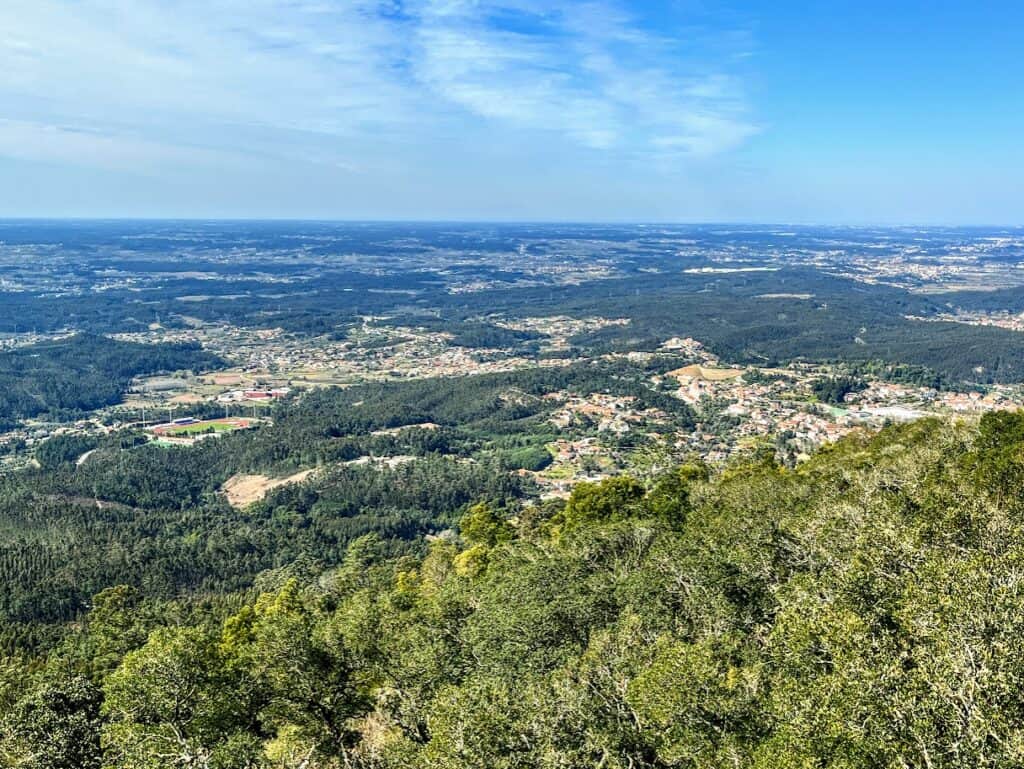
The summit has incredible panoramic vistas of the surrounding Portuguese countryside.
#5 – The Fountains
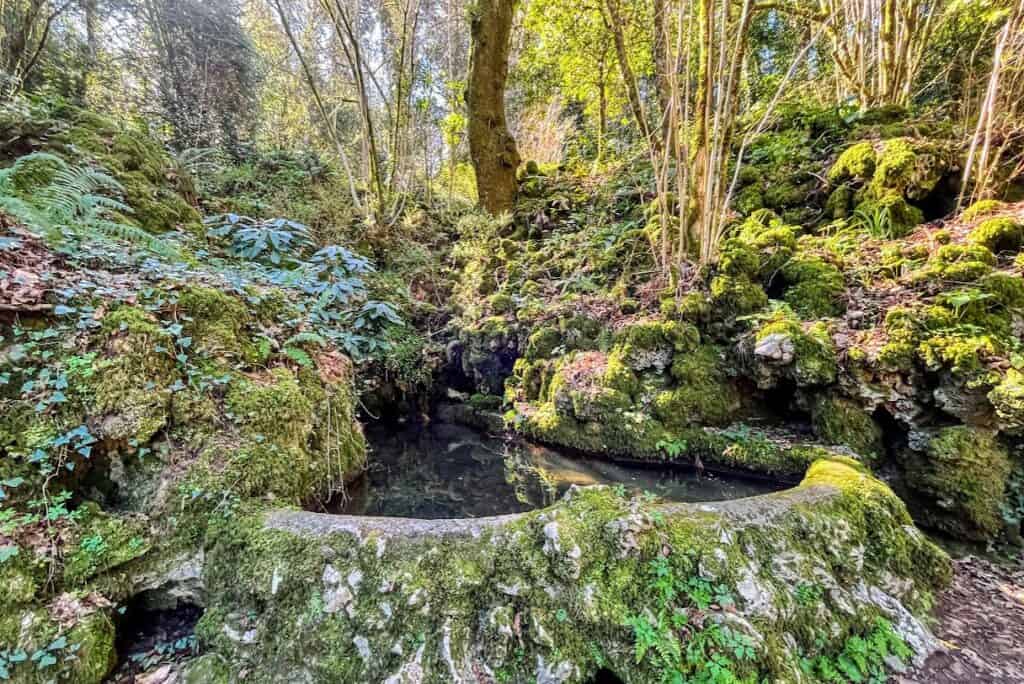
Bussaco Forest is home to a series of notable fountains besides Fonte Fria, including Fonte de Santa Teresa, Fonte da Samaritana, Fonte de Sao Silvestre, and Fonte de Santo Elias.
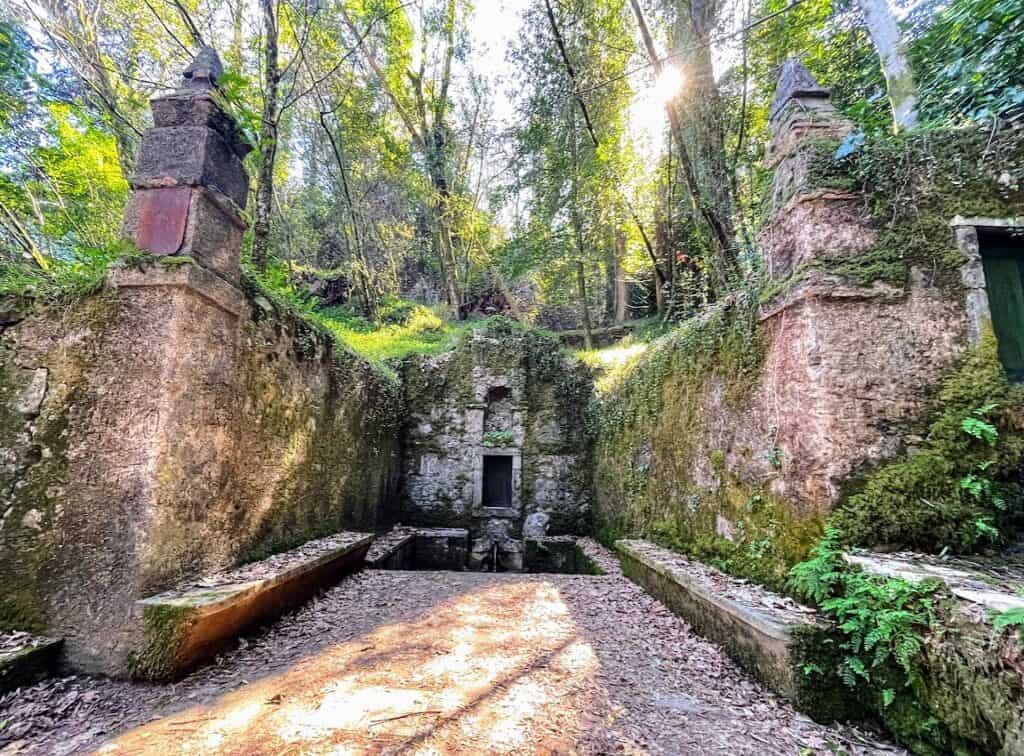
These fountains are not just ornamental but were also vital water sources for the Carmelite monks who once inhabited the forest.
There is a trail, “Trilho da Agua”, which takes you to see the fountains – this was the first thing we did in the forest after seeing the Palace.
Some of the fountains are more impressive than others but the backdrop of the forest is beautiful everywhere!
#6 – Carmelite History
Carmelite monks established their presence in Bussaco Forest in the early 17th century, seeking a secluded space for contemplation and prayer.
They constructed a convent and several small chapels, some of which still stand today and you can see them on your visit!
The best preserved is the Convent of Santa Cruz, a lovely display of the Carmelites’ architectural and religious influence.

Additionally, scattered throughout the woodland are various hermitages and chapels, allowing visitors to step back into the tranquil, meditative world of the Carmelite monks and offer a unique glimpse into life during this era.
#7 – Gardens and Botanical Diversity
A prime reason for exploring Bussaco Forest and Bussaco Palace is the garden and rich botanical diversity.
Home to a rich array of native and exotic species, the forest serves as a living library of plants collected by the Carmelite monks over centuries, including rare trees and ornamental plants from around the world.
The lush vegetation thrives thanks to rich soil and numerous water sources nourishing the forest. It boasts 21 isolated specimens and 6 groups of trees classified as trees of public interest.
They do a good job of providing labels for plants and trees so you can identify different species along the way.
Kelsea loved the groomed garden while Nicholas preferred the unkept forest.
# 8 – Hiking
The forest’s landscape is crisscrossed with scenic hiking trails that cater to all levels of adventurers.
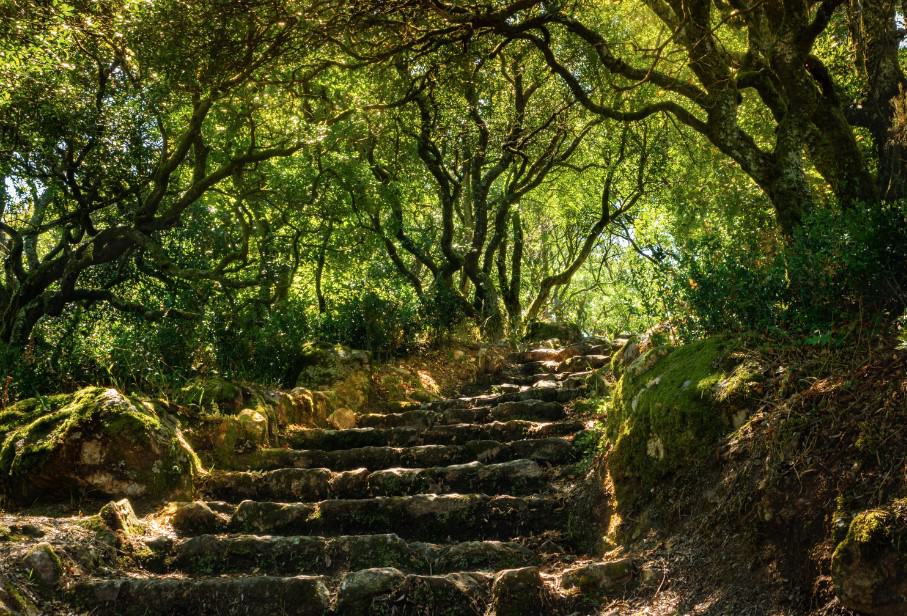
Whether you’re seeking a leisurely walk or a more challenging hike, there are trails for everyone, revealing stunning vistas, secluded groves, and historical sites.
We recommend keeping a map handy! We found a few of the trails hard to follow… but we have more on the tails in a bit 🙂
#9 – Wildlife

For wildlife enthusiasts, Bussaco is a vibrant ecosystem teeming with birds, mammals, and insects.
There are over 150 species of mammals, reptiles, amphibians, and fishes, and about 80 species of birds.
The forest’s diverse habitats provide ample opportunities for wildlife observation and photography, making it a favorite destination for nature photographers and bird watchers.
Additionally, they do a good job of providing educational signs of the wildlife to look for!
#10 – Tranquility
Above all, the tranquil atmosphere of Bussaco National Forest offers a peaceful retreat from the outside world.
The quiet rustle of leaves, the soft forest floor beneath our feet, and the gentle play of light through the canopy created a serene environment that we loved to visit.
We enjoyed our trip to Bussaco Forest because it was a place where we could unwind, reconnect with nature, and experience the restorative power of spending time outdoors.
Top Bussaco Forest Hikes
Bussaco Forest offers a range of hiking trails that cater to different preferences and fitness levels. Here are some of the top Bussaco Forest Trails:
The High Cross Trail (Trilho da Cruz Alta)
Leading to the highest point in the forest, Cruz Alta, this trail is around 5 kilometers (3.1 miles) long. It is moderately difficult but rewards hikers with panoramic views of the surrounding area.

Our favorite part about this trail is that it follows the path past the chapels with stations of the cross (Via Sacra).
There are even a few really cool abandoned ermidas (hermitages) at the top with great views before you get to the Cruz Alta.
👉 If you want to make time for 1 hike, this is the one we would prioritize! 🥾
The Convent Trail (Trilho do Convento)
This trail takes you around the historic Carmelite Convent. It’s a relatively easy hike, ideal for those interested in the forest’s religious history.
The trail is about 3.4 kilometers (2.1 miles) long and offers a peaceful walk through ancient trees and past historic chapels.

The Luso Trail
This trail takes you from the city of Luso all around the park. It includes the convent, the palace, Cruz Alta, and even takes you up the Fonte Fria.
It is the longest trail at 6.6km (4.1 miles).
The Military Road (Trilho Militar)
This route has historical significance as it follows the path used by Wellington’s troops during the Battle of Bussaco.
It’s a longer hike but takes you to the Obelisk Memorial (Obelisco Comemorativo da Batalha do Buçaco) and the Military Museum (Museu Militar).
The Arboretum Path (Trilho do Arboreto)
Ideal for those interested in botany, this trail showcases the forest’s diverse range of tree species.
It’s an easy, 2-kilometer (1.2 mile) walk, perfect for a leisurely stroll.
Each trail offers a unique perspective of Bussaco Forest. Always remember to wear appropriate footwear, carry water, and check local conditions before setting out on any hike. Don’t forget a map!
How Much Time to Spend at Bussaco Forest
We recommend allocating 1 full day to explore Bussaco Forest to enjoy the hikes, historical sites, and botanical wonders.
To enhance the experience, we highly suggest staying a night at the luxurious Bussaco Palace Hotel or in the nearby town of Luso. We didn’t and it is a regret we have!
One Day Bussaco Forest and Bussaco Palace Itinerary
For an unforgettable day at Bussaco Forest and Bussaco Palace, here’s an ideal itinerary, based on experience, to help you make the most of your visit:
Morning in Bussaco Forest
- Start at Bussaco Palace:
- Begin your day early at the Bussaco Palace. Even if you’re not staying there, the exterior and the surrounding gardens are worth exploring.
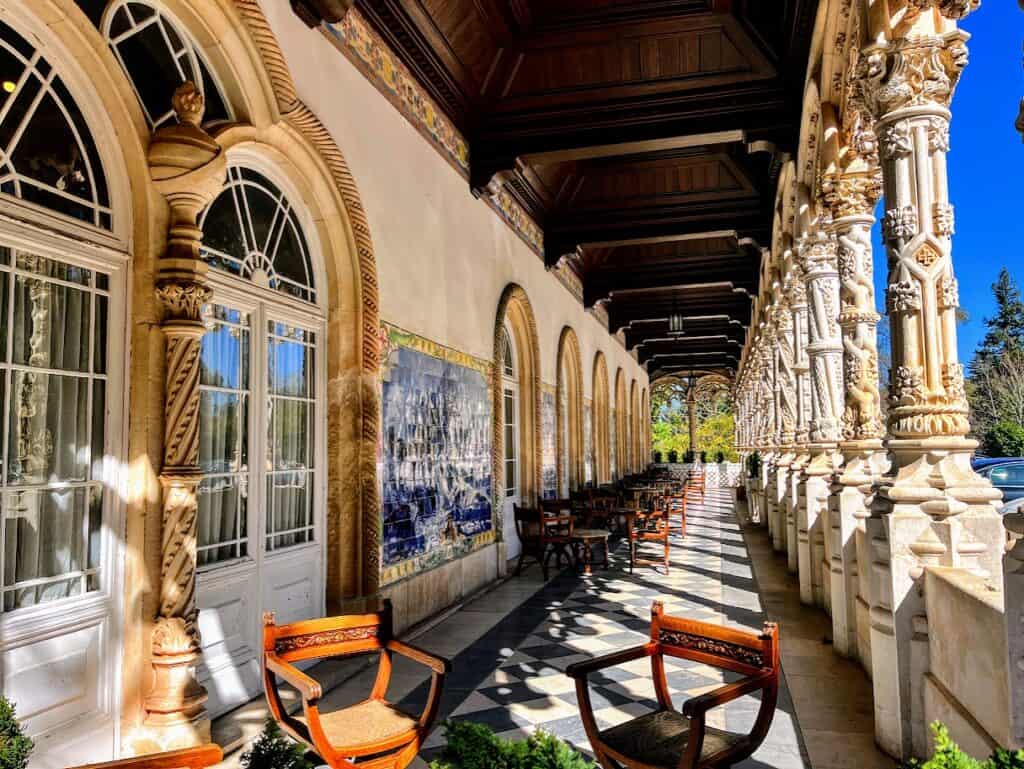
- The blend of Manueline, Gothic, and Moorish architecture is breathtaking in the morning light. The gardens feature a variety of exotic plants and trees, a testament to the forest’s botanical richness.

- Breakfast at Palace Hotel do Bussaco:
- Enjoy breakfast at the hotel. They offer a range of options, from local Portuguese dishes to international cuisine.
- Visit Fonte Fria:
- Post-breakfast, head out to the cool steps of Fonte Fria. You may have to wait your turn to get the perfect photo but it is worth it – the steps and fountain are incredible!
- Have time? Head to the Museu Militar do Buçaco (Military Museum):
- This small museum offers insights into the Battle of Bussaco and the history of the forest. It is along the Trilho Militar if you take that trail, or you can drive there from the Bussaco Hotel.
Afternoon in Bussaco Forest
- Explore the High Cross Trail (Trilho da Cruz Alta):
- Hike this moderate 5-kilometer loop trail that follows the Via Sacra and leads to Cruz Alta, the highest point in the forest. The panoramic views here are spectacular.
- Picnic Lunch:
- Pack a lunch from a local deli or the hotel. You can enjoy it at one of the many scenic spots along the trail, but we highly recommend enjoying it at the top at the Cruz Alta.
- Relaxation and Photography:
- After the hike, take some time to relax and capture photos of the unique flora, historical chapels, and enchanting forest landscapes. This is a good time to see the fountains on Trilho da Agua.
- Afternoon Tea at the Palace Hotel:
- Around 4 PM, head back to the Bussaco Palace for afternoon tea.
Evening in Bussaco Forest
- Sunset Walk:
- If time and energy permit, a leisurely walk in the forest at sunset is a peaceful way to end your day in the Bussaco Forest. The play of light through the trees creates a magical atmosphere.
- Dinner at a Local Restaurant:
- Conclude your day with dinner at a local restaurant in Luso, the nearby town. We had a romantic dinner at Restaurante Pedra de Sal with octopus, black pork, wine, and chocolate cake to finish it off.
Tips for Your Visit to Bussaco Forest
Ensure a fantastic trip to Bussaco Forest and the Bussaco Palace with these tips:
- Wear comfortable walking shoes for the hikes and high socks/pants! We found it to be a bit buggy so you will want to keep your legs covered.
- Get a map of the grounds as soon as you get there and hang onto it! Cell service is patchy and we got lost a time or two while exploring and the map helped get us on track.
- Check the weather forecast and dress accordingly.
- Keep a water bottle handy to stay hydrated.
- Remember to respect the natural environment and historical sites.
Where to Stay for Bussaco National Forest
Exploring Bussaco National Forest offers a range of accommodation options to suit different preferences and budgets.
Here are three recommended places to stay, categorized into luxury, mid-level, and budget choices:
💎 LUXURY: Palace Hotel do Bussaco – OUR #1 CHOICE FOR THE EXPERIENCE
If you can, you should! You will be spending the night like literal royalty – the Bussaco Palace Hotel is a former royal palace. Its rich history, elegant rooms, and exquisite dining options make it a top choice for a luxurious stay.

- Amenities: Expect top-notch services like fine dining restaurants, beautifully landscaped gardens, and opulent, historically-themed rooms.
- Why We Like It: The hotel itself is a historical monument with a once-in-a-lifetime opportunity
⭐️ Mid-Range: Grande Hotel de Luso
Located in the nearby town of Luso, this hotel offers a comfortable and convenient stay.
- Amenities: Facilities include an indoor and outdoor pool, a wellness center, and a restaurant serving local and international cuisine.
- Why We Like It: Its proximity to both Bussaco Forest and the town of Luso makes it ideal for exploring the region while enjoying contemporary comforts.
💲ECONOMY: Residencial Imperial
For those on a budget, Residencial Imperial in Luso is a great choice. It’s a cozy, family-run guesthouse offering a warm, welcoming atmosphere.
- Amenities: Basic but comfortable rooms, a friendly service, and a homely feel. Some rooms offer views of the surrounding area.
- Why We Like It: Its affordability and the personal touch in service.
Each of these options provides a different way to experience the beauty of Bussaco National Forest and its surroundings.
Bussaco Forest Map
You can get a Bussaco Forest Map when you enter the park at one of the gates or at the informational center/store.

How to Get to Bussaco Forest
Getting to Bussaco Forest in Portugal is relatively straightforward.
We reached the Bussaco Forest by car, but there are multiple transportation options available. You can opt for a bus, train, or taxi to get there.

If driving, put Porta das Ameias in your GPS and be prepared to pay €6 to enter the park with a car.
🚨 We were confused because it is a small entrance, but this is where you go in! 🚨
The park is free to visit when you enter on foot or bicycle. It is €6 for a car or €15 for campers (there were a lot of campers parked around the park). The entrance fee helps preserve the park and restore its natural beauty.
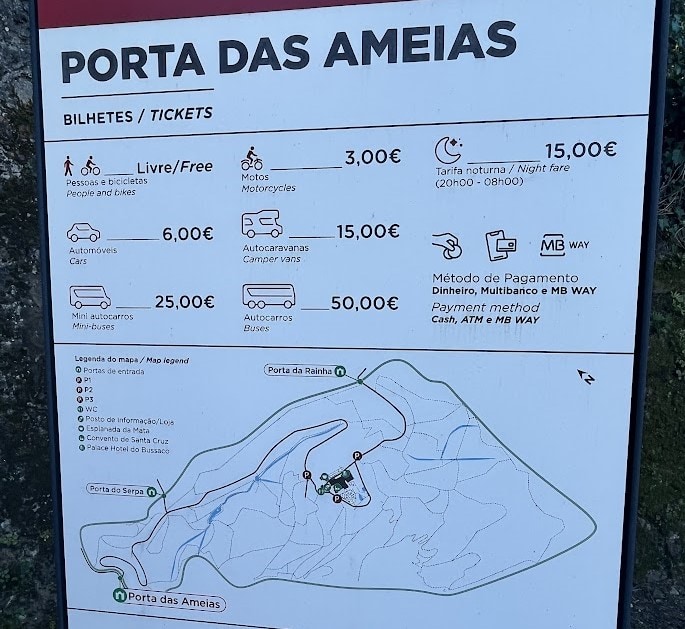
Here are the most common routes and some helpful tips for your journey:
Getting to Bussaco Forest From Lisbon:
- By Car: The fastest way is to drive from Lisbon, which takes about 2 to 2.5 hours. Take the A1 motorway north towards Porto, and exit at Mealhada or Luso to reach the forest.
- By Train: You can take a train from Lisbon to Coimbra, which takes about 2 hours. From Coimbra, you’ll need to another train to Luso which takes about 40 minutes.
- By Bus: We weren’t able to find a direct bus – you’ll likely need to go through Coimbra so we would suggest prioritizing the train option as it will be faster.
Getting to Bussaco Forest From Porto:
- By Car: The drive from Porto takes about 1.5 hours. Use the A1 motorway, heading south, and exit at Mealhada or Luso.
- By Train: Take a train to Coimbra and then switch to the regional train for the remaining journey to Luso.
Getting to Bussaco Forest From Coimbra:
Bussaco Forest is one of our favorite Day Trips from Coimbra!
- By Car: It’s a 40-minute drive from Coimbra to Bussaco Forest, via the IC2 and N234.
- By Train: A one-way train ticket from Coimbra to the Luso Train Station costs approximately €4. Then, complete your journey to the Bussaco Forest by taking a taxi or walking.
- By Tour: There are tours that leave from Coimbra that take you to the Bussaco Forest and Palace of Bussaco.
Tips for Your Journey to Bussaco Forest:
- Navigation: Have a GPS or a reliable map app on your phone, including an offline option – we lost service a time or two.
- Parking: If you’re driving, be aware of the parking facilities near and in Bussaco Forest. During peak tourist seasons, parking spots can fill up quickly.
- Early Start: Start your journey early, especially if you’re traveling from Lisbon or Porto, to maximize your time in the forest.
- Weather Check: Before setting off, check the weather forecast. The forest can be quite damp and cooler than the surrounding areas, so dress accordingly.
- Fuel Up: If you’re driving, ensure your vehicle has enough fuel, as there are limited gas stations in the immediate vicinity of the forest.
FAQs for Bussaco Forest Portugal
What is the history of the Bussaco Forest?
The Bussaco Forest in Portugal, initially a retreat for Carmelite monks in the 17th century, was later expanded and enriched with diverse tree species from around the world.
It became a public forest after the dissolution of religious orders in 1834, and has a history marked by the Battle of Bussaco in 1810.
What is the ancient forest in Portugal?
The ancient forest in Portugal is the Bussaco (or Buçaco) Forest. It is a centuries-old woodland renowned for its historical and botanical significance.
What is the history of the Palace Hotel do Bussaco?
The Palace Hotel do Bussaco, or Bussaco Hotel, originally commissioned as a royal summer palace and hunting lodge, was completed in 1907.
Following the assassination of the king, King Carlos I, and the crown prince, Luis Filipe, it was converted into a hotel in 1910.
Where is Buçaco?
Bucaco, also known as Bussaco, is located in central Portugal, in the northern part of the Coimbra district.

What are the Bussaco Forest Portugal things to do?
In Bussaco Forest Portugal, visitors can explore historical sites like Bussaco Palace, hike various trails to spots like the Fonte Fria and Cruz Alta, and enjoy the rich botanical diversity.
What are the main attractions in Bussaco Forest?
Bussaco Forest is renowned for its rich historical and natural attractions. Key highlights include the Bussaco Palace, a stunning architectural marvel; the Carmelite Convent ruins, offering a glimpse into the forest’s religious past; and the Fonte Fria, a beautiful waterfall surrounded by staircases.
There is also a diverse range of flora, including both native and exotic species as you walk various hiking trails, such as the High Cross Trail and Convent Trail.
Can you stay inside Bussaco Forest?
Yes, you can stay inside Bussaco Forest. The most notable accommodation is the Palace Hotel do Bussaco, a luxurious hotel that was once a royal hunting lodge. It offers guests a unique experience with its historical ambiance and elegant decor.
Is Bussaco Forest suitable for families and children?
Absolutely, Bussaco Forest is a family-friendly destination. The forest offers various easy-to-walk trails that are suitable for children, and its natural beauty and historical sites provide an educational and enjoyable experience for all ages.
The peaceful environment is great for family picnics, and the diverse plant life and wildlife can be both entertaining and educational for children.
In Conclusion: Bussaco Forest Portugal

We hope this comprehensive guide, detailing the best sights, hikes, and our one-day itinerary recommendation, proves invaluable in planning your visit to Bussaco Forest.
We aim to ensure you’re well-equipped to enjoy everything this magnificent forest has to offer.
We had an unforgettable time exploring its wonders and trust you will too. Here’s to a journey as enriching and enjoyable as ours was in the enchanting Bussaco Forest!
We wish you the best travels, and don’t forget to set your “Out of Office!”
🌟 Loving our content? Support the journey and buy us a coffee! ☕️
Read More About Portugal
- Portugal 8 Day Itinerary – 3 EXCELLENT Options
- Lisbon and Algarve Itinerary: GREAT 5 to 10 Day Options
Central Portugal
- How Many Days in Lisbon Do You Need
- Lisbon Itinerary 4 Days – The Perfect Guide
- Lisbon to Algarve: 7 Best Options Explained
- 13 BEST Tours in Sintra
- Getting Around Sintra: 10 Great Options
- Pena Palace or Quinta da Regaleira: Which is Better?
- Visit the Evora Chapel of Bones + Top 10 Evora Attractions
- 16 BEST Evora Tours: 2025 Travel Guide
- Guide to Evora Megaliths: Portuguese Stonehenge
Northern Portugal
- The PERFECT 48 Hours in Porto Itinerary
- Is Porto Worth Visiting? An Honest Review
- Best Douro Valley Wine Tours: 2025 Travel Guide
- Is Coimbra Worth Visiting? 23 Great Reasons to Visit Coimbra
- 15 BEST Coimbra Tours
- 18 BEST Day Trips From Coimbra
- Bussaco Forest Guide: Top 10 Sites & Best 5 Hikes
Algarve (Southern Portugal)
- AWESOME Lisbon to Algarve Road Trip Itinerary
- 15 Best Day Trips from Lagos, Portugal
- How to Get from Lagos to Sagres
- 15 Best Algarve Towns Ranked
- 21 BEST Day Trips from Albufeira
- 11 Best Things to Do in Faro Old Town
- Faro Nightlife: 46 BEST Things to Do at Night in Faro
- 17 BEST Hotels in Faro with Pools
- Faro in Winter: 13 FUN Things to Do
- Faro to Albufeira: 9 EASIEST Options
Portugal Travel Planning Guide
🚙💨 Is it safe to rent a car in Portugal?
Yes! Renting a car is a necessity in most of Portugal if traveling between cities!
If you want to go on day trips or adventures outside of the major cities, you can use public transportation, but we recommend renting a car. Discover Cars is our go-to choice for car rentals in Portugal.
📲 Will my phone work in Portugal?
Maybe, but it will be expensive! Depending on your provider, plans can charge you $10 per day while in Europe.
To use your phone in Portugal and save money, we recommend an eSim with Airalo. Airalo simplifies the steps and provides you with all the necessary data for convenient travel.
There is not a lot of free WIFI in Portugal, so you’ll need your phone for navigating.
🌐 Do I need a VPN when on the internet in Portugal?
While abroad, we consistently prioritize our online security by using a VPN to appear as if we’re streaming from the US and protect ourselves from cybercrime.
NordVPN serves as an incredibly convenient solution for both mobile phones and laptops, effortlessly ensuring our safety while browsing or streaming.
🏩 What’s the best way to book my Portugal accommodations?
Our go-to for Portuguese hotels is Booking.com. They offer the widest range of choices, and their filtering system simplifies the process of discovering the perfect accommodation for your needs.
✈️ What’s the best site to buy flights to Portugal?
For finding cheap flights to Portugal, we recommend Kayak. Their awesome multi-city flight search and handy price notifications help us save big, allowing us to splurge on other adventures once we arrive.
TAP Air Portugal is usually our airline of choice while in Portugal.
🚐 Should I book tours in Portugal? Do the guides speak English?
We LOVE taking tours in Portugal.
We prefer to book our tours on Viator and GetYourGuide for easy searching, trusted reviews, and transparent pricing. We always filter for the tours that are offered in English.
For free walking tours in English, we always book through GuruWalk.
🚑 Should I buy Portugal travel insurance?
100% YES! Portugal has a publicly funded healthcare system known as the Serviço Nacional de Saúde (SNS), which provides universal healthcare coverage to all Portuguese citizens and legal residents!
Foreigners visiting need travel insurance in case anything happens on their visit. We recommend Safety Wing – they provide general travel coverage as well as medical!
💧Can you drink the water in Portugal?
Sometimes! In many areas of Portugal, the water is safe to drink. However, there can be variations in water quality from one location to another.
In some rural or remote areas, or in older buildings with outdated plumbing systems, water quality might not be as high.
For an extra layer of protection, we recommend always using a LifeStraw Go Series to stay safe and hydrated.
🎫 Do I need a visa for Portugal?
Likely Not! US passport holders don’t need Portuguese visas for travel less than 3 months. If you plan to stay for more than 3 months, you will be considered a resident and must have an entrance visa.
